Community Event Bridges Mental Health, Movement and Meaningful Connection
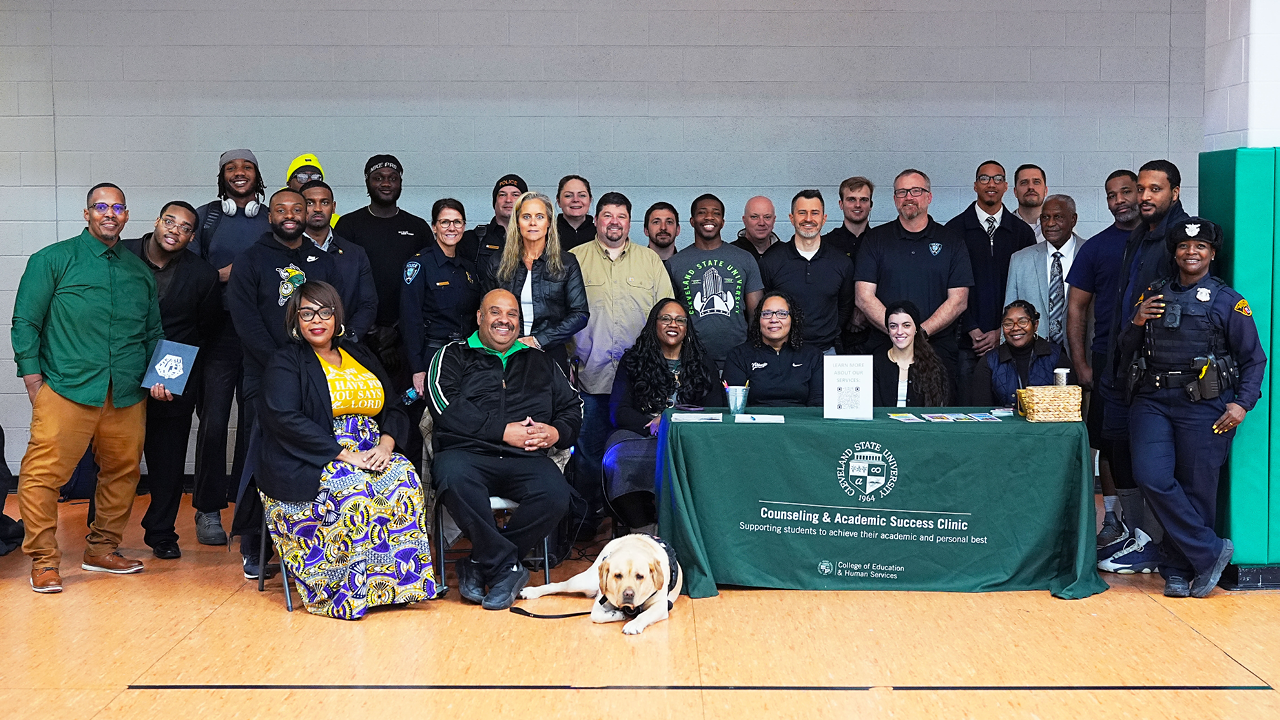
CSU students recently laced up their shoes and stepped onto the court for more than just competition at the Dr. William Wasson Basketball Challenge.
Hosted in partnership with the Howard A. Mims African American Cultural Center (HAMAACC), the CSU Recreation Center and CSU Health Occupations Students of America, the event brought together student organizations, campus counseling services and local law enforcement with one shared goal: strengthening community while promoting mental health awareness.
The event blended friendly competition with meaningful conversation, creating a welcoming environment where students could nurture both their physical fitness and mental health — while fostering connection and breaking down barriers in the process.
“This event started with the need for a Black History Month program to honor Dr. William Wasson,” said HAMAACC Coordinator Prester Pickett. “We partnered with the Rec Center because he established the National Intramural and Recreational Sports Association, an organization that encourages students to be involved in athletic activities. Those activities are important, especially for our students who are not involved in formal sports teams.”
Turning Plans into Power: A Conversation on Mental Health and Student Success
The event featured Theodore Tate III, a behavioral health specialist and community liaison with Restore Outreach Center, who connects schools and community organizations with on-site mental health services.
“We all have mental challenges that we face every day,” said Tate. “Some days are harder than others, and we need someone to help guide us through those challenges.”
He emphasized the need to normalize therapy and conversations surrounding mental health.
“I want it to be natural for people to seek support,” said Tate. “It’s not about labelling someone. It’s about understanding that we’re human.”
Sir Evans, a strategic planner, speaker and founder of the Superpower Planner movement, encouraged students to harness their strengths and take intentional, strategic action, including the use of planners.
“I wanted to not only create a product, but a framework that made people say, I can't leave home without my phone, why would I leave home without a plan,” he said. “I designed a superpower planner – that helps break down those goals into smaller pieces – while also still being able to stay connected to tech and their devices.”
Evans said planning turns ideas into achievable goals and urged students to identify their unique “superpower” to make a personal and community impact. He also credited Dr. Wasson with building a lasting structure of belonging on campus.
“The event helps to celebrate the purpose of the development of the intramural sport, bringing that connection so people can be involved,” said Evans. “They can participate and drive engagement helps to drive retention. It has compound value and there are multiple layers where students can not only have that impact, but they can also have that community, that engagement in a place that was really designed for them to belong.”
Counseling Center Encourages Holistic Self Care
Sharisse Edwards, coordinator of counseling training for the CSU Counseling and Academic Success Center (CASC), emphasized how critical events like this are for students’ overall health.
“Physical health is very important for mental health,” said Edwards. “Sometimes we get stuck in our routines, especially students — going to class, studying, getting little sleep — and we forget about exercise. Events like this encourage people to come out, play basketball, build community and remember that resources are here for them.”
Edwards emphasized that CASC offers resources to support CSU students academically, emotionally and culturally, from counseling and crisis support to workshops and one-on-one guidance.
“We have groups, individual sessions, and sometimes students just need to come in and talk for a few minutes and that's it,” said Edwards.
Law Enforcement Focuses on Community Engagement
Beverly Pettrey, chief of police at the CSU Police Department, said community-centered events are essential to building trust.
“Community engagement, community policing is very important,” said Pettrey. “This is a perfect way to break down barriers, get us out there, communicate with the community and let them know we're people just like you.”
Pettrey said CSU officers receive crisis intervention training to better respond to individuals experiencing mental health challenges.
“Having that awareness training is important because a lot of the time, that's what the issue is,” said Pettrey. “If we can get to the root of that and provide some help, it can really mitigate and lessen the issue and have a better outcome.”
Cleveland Division of Police officers echoed that sentiment, including Officer LaKisha Harris, who has been in law enforcement for 18 years and serves as training coordinator and Fifth District Missing Persons liaison.
“You never know what you’re going to get,” said Harris. “You may get that one person who was thinking about hurting themselves or someone else, and one conversation can change their day.”
Officer Jordan Blade said gatherings like this give students the opportunity to interact with officers in a relaxed, positive setting, allowing them to build familiarity and connection beyond the high-pressure moments that often define law enforcement encounters.
“The event bridges a gap. Depending on where you come from, people don't like the police or they're scared of the police,” said Blade. “This gives you a chance to see the human side of us.”
From Competition to Connection: A Student Leader Reflects
Richard Pickett, president of Health Occupation Students of America (HOSA) at CSU, an organization that supports and prepares students pursuing careers in the health professions, said playing basketball against law enforcement was a highlight. The exercise science major described the game as both fun and competitive.
“We were going back and forth the whole time. There was plenty of playful smack talk, but it was all good fun,” said Pickett. “Just getting that connection with law enforcement is huge, especially with everything going on right now.”
Beyond the game, the event offered a deeper experience: an opportunity to connect with officers and build a baseline of trust.
“It’s about building relationships and community,” said Pickett. “Having a common ground where we all could meet in one space, have fun, and also communicate is extremely important.”