CSU’s Verizon Community Forward Learning Center Marks One Year of Innovation, Access and Impact
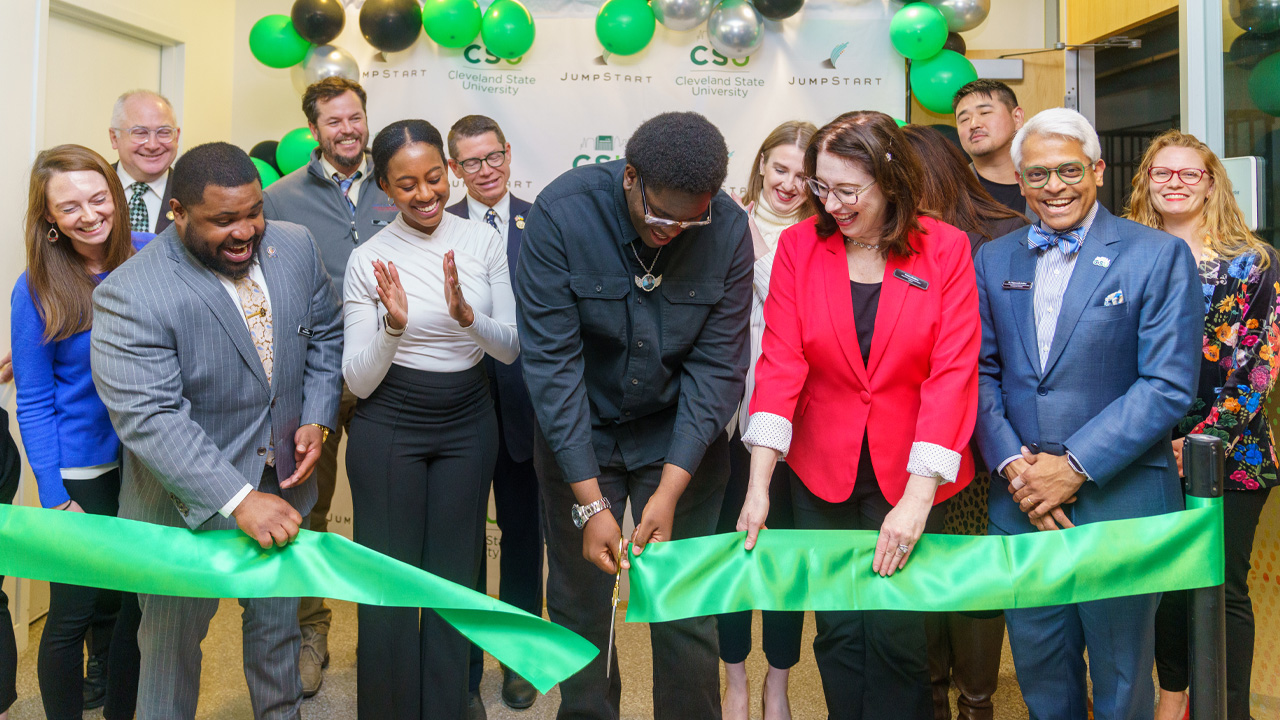
A little more than a year after debuting to the CSU world with plenty of pomp and circumstance in Julka Hall, the Verizon Community Forward Learning Center at CSU has emerged as a hub for innovation, digital learning and community connection, bringing together students, faculty and community members to explore new technologies, build skills and collaborate across disciplines.
“We’ve definitely grown,” said Amanda Yurick, director of the Verizon Community Forward Learning Center and faculty member in special education. “Our center regularly hosts open lab hours for community members to come in, learn the technology and use it to assist with things like small business development.”
From digital learning labs to upcoming summer camps, the center is expanding its programming and strengthening its role as a bridge between the university and the broader Cleveland community while connecting academic resources to community needs, including providing in-person and online tutoring over the past year for K-12 students affected by cuts to after-school programs.
“We always have a pretty lengthy waiting list,” said Yurick. “Families have been struggling to find support, so we’re really helping fill that gap.”
The center has partnered with initiatives like the Ed Collective to give pre-service teachers hands-on clinical experience while expanding access for local students and has hosted hundreds of visitors through workshops and events focused on digital literacy and workforce readiness.
“That's been very impactful for community members, lots of people who are external to the university,” said Yurick. “I think that's a big deal because that brings the university more into the actual community of Cleveland rather than insulated into university life.”
A Hub for Creativity and Workforce Development
According to Rita Mikita, manager of the Verizon Community Forward Learning Center, the facility hosted 754 visitors for structured programming in its first year.
“The growth has been steady and encouraging,” said Mikita. “A large part of that momentum comes from our recurring monthly tech workshops and youth programming.”
From the Community Innovation Challenge (formerly known as hackathon) and career camps to entrepreneurship workshops for small-business owners, the center’s flexible design allows it to serve a wide range of audiences.
“The Learning Center serves as a bridge between curiosity and career-ready skills,” said Mikita. “We’re demystifying complex tools for the average user.”
One standout offering is youth entrepreneurship programming, in which students use professional-grade technology to design, create and market their own ideas.
“When you give students creative freedom, they don’t just learn how to use a machine, they start thinking like designers and business owners,” she said.
Unique Role Within the Community Forward Network
The CSU location is one of three Verizon Community Forward Learning Centers in Cleveland, alongside sites in Clark-Fulton and Union-Miles, and while those locations serve as neighborhood-based community hubs, CSU’s campus setting offers something distinct.
“I think what’s unique about CSU is really integrating the university community,” said Yurick. “We’ve built strong relationships not only with external partners but also with faculty across campus."
Mikita echoed that distinction, noting the campus location provides a high-visibility academic partnership that supports workforce development and interdisciplinary collaboration.
“While it doesn’t have the same backyard/neighborhood feel as the others, its position on campus allows for unique collaborations with university talent and provides a professionalized environment that lends itself well to workforce development,” said Mikita.
That partnership is further strengthened with organizations like JumpStart Cleveland, where technical resources and academic expertise combine to expand opportunities for students and the public.
Challenges and Opportunities Ahead
Like many higher education initiatives, the center faces challenges, particularly around sustainable funding and visibility.
“Our biggest challenge has been driving organic walk-in traffic,” Mikita said. “We’re working hard to let people know that ‘open to all’ truly means everyone, regardless of whether they are a CSU student. We’ve also had to navigate some of the logistical hurdles that come with a downtown campus, such as parking access for our community members.”
Yurick added that broader funding constraints in education have complicated long-term planning, but the center continues pursuing grants and partnerships while also exploring new collaborations, including potential work with the Cleveland Book Fund and interdisciplinary literacy initiatives.
Building the Future Forward
As the initial grant funding for the Verizon Community Forward initiative approaches its end in December 2026, the focus is shifting toward sustainability and long-term impact.
“We are developing a long-term plan to ensure the center remains a resource for Cleveland,” said Mikita, also noting that participants are returning for additional workshops, evolving from first-time users into confident regular creators.
For Yurick, those transformations, whether in a K-12 student, a college learner or a community entrepreneur, represent the center’s greatest success.
“Whether you are a student, a business owner or just curious,” said Mikita, “we invite anyone to come in and get creative.”